QR Code History
QR codes were invented by the Denso Wave automobile products company, as a way to encode data about packages of products. The initial alternating square design was developed by Masahiro Hara, and was inspired by the Go board. The pattern of the detection markers was based on the least common pattern in written text, which turned out to be 1:1:3:1:1 ratio of black and white modules.
QR Pattern
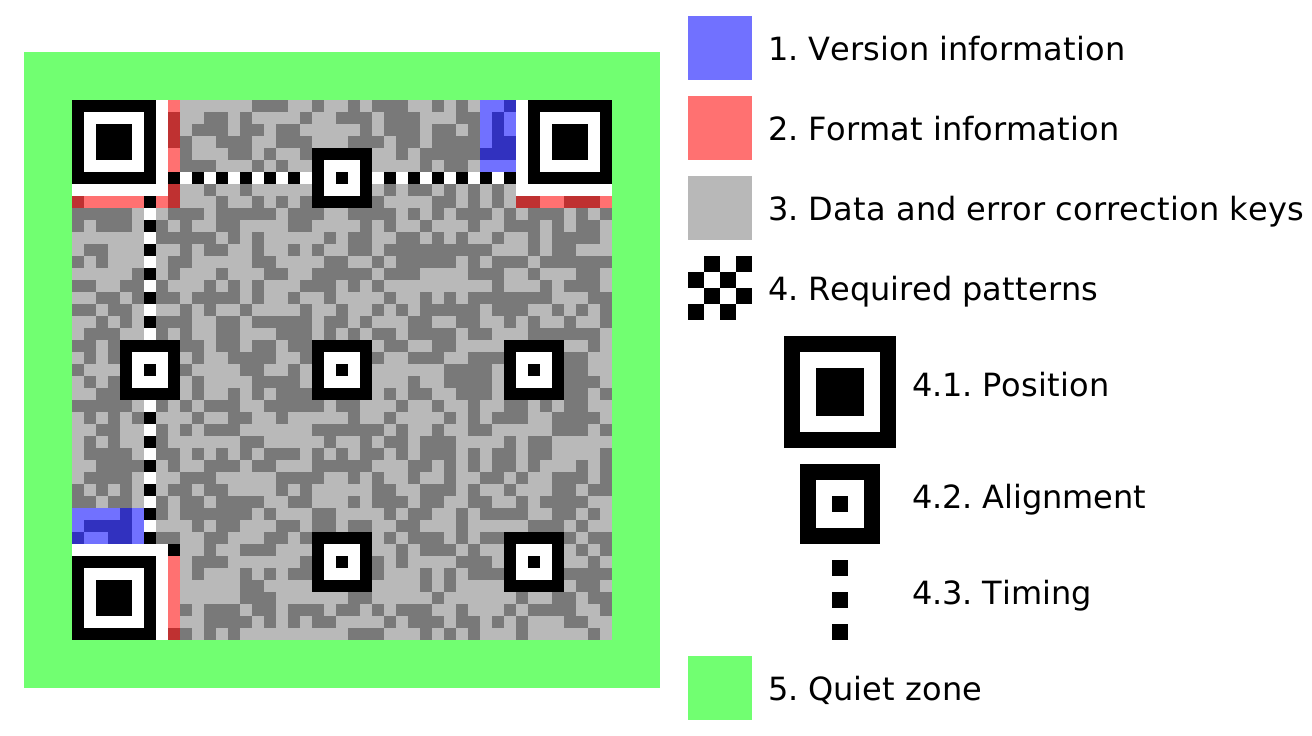
A QR code consists of position markers, a alignment marker, timing patterns, data modules, error correction modules, and a quiet zone. The position markers are the large squares in three corners of the code, which help the scanner locate and orient the code. The alignment marker is a smaller square near the bottom right corner, which helps with distortion correction. The timing patterns are alternating black and white modules that are used to determine the size of the QR code. The data modules contain the actual encoded data, while the error correction modules allow the code to be read even if it is partially damaged. Finally, the quiet zone is a margin of white space around the code that helps the scanner distinguish the code from its surroundings.